


Storage systems in intralogistics with intelligent sensors
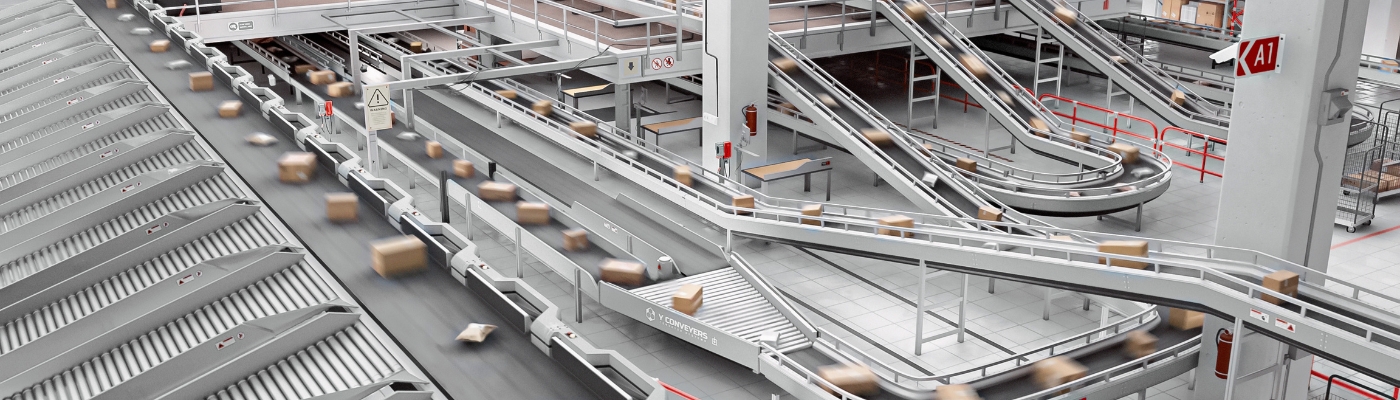
In a warehouse, fulfilment center or distribution center, specialized conveyor systems tailored to the specific requirements of the respective application are used in the storage area, alongside the conveyor systems in goods receipt and infeed areas. Various technical solutions are available for this, depending on the type of goods, the load carriers used, and the physical layout of the warehouse, for this purpose.
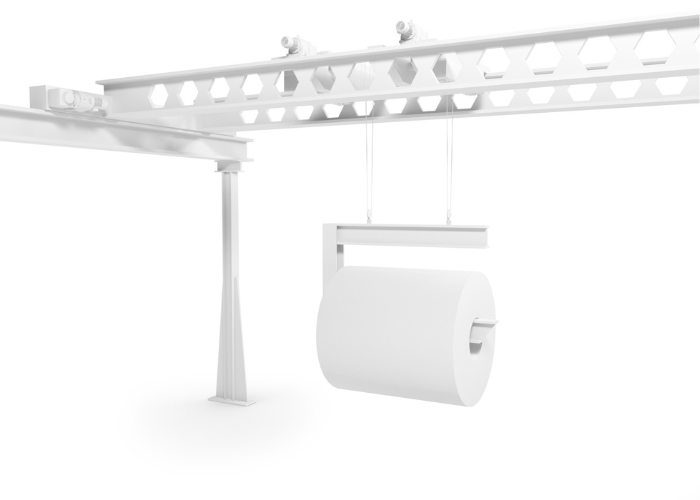
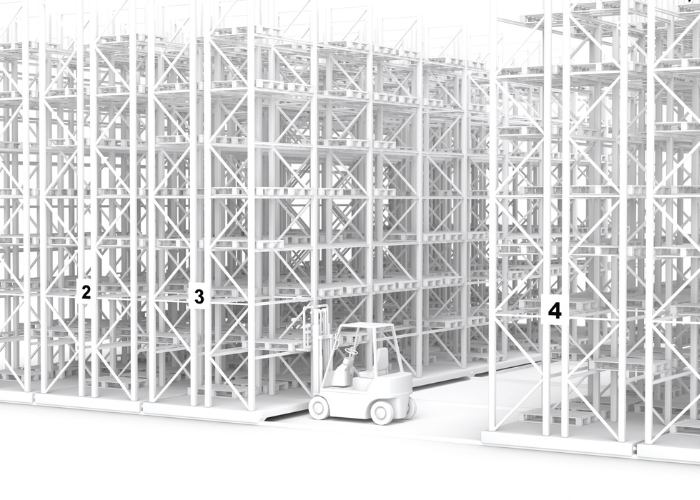
Established systems include, in particular, rail-guided stacker cranes for the automatic storage and retrieval of pallets and containers, as well as shuttle systems that are designed and engineered to be compatible with the respective load carriers and warehouse structures. For particularly large or heavy goods, cranes and trolleys are also used. To further optimize space utilization, side-tracking shelves are also used in this area. The rows of shelves in these systems are movable, which reduces the number of permanent aisles needed. Access to a specific row of shelves is provided by moving the shelves as needed. This allows for more efficient use of the available storage space and increases storage capacity within the same floor area.
Your benefits with our efficient storage system solutions

Precise positioning
Solutions tailored to a wide variety of positioning tasks
Simple integration
Direct connection to the drive reduces integration effort

Solutions from a single source
From your requirement to the right storage system sensor solution
Sensor solutions for various storage systems
Automated storage systems place various demands on sensor technologies and safety solutions. Discover suitable solutions for stacker cranes, shuttle systems, side-tracking shelves, and cranes in intralogistics.
Customer projects and references
Efficient and safe processes are crucial for high-performance intralogistics. Selected customer projects demonstrate how intelligent sensor solutions from Leuze solve specific challenges and reliably support automated processes.
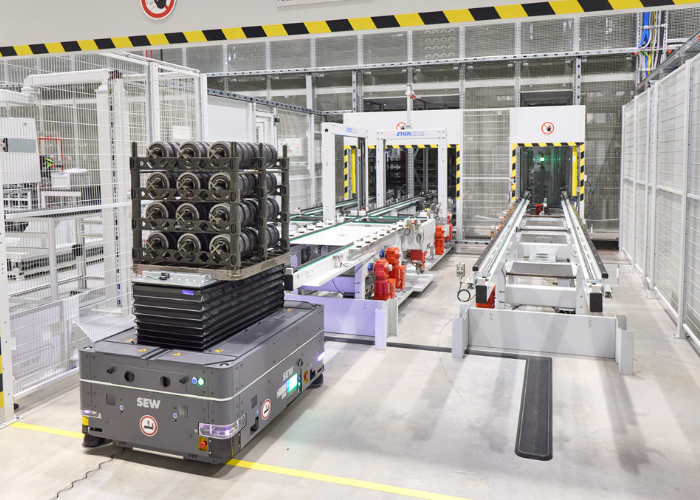
Sensor systems for the high-bay warehouse at SEW-EURODRIVE
Sensor solutions from Leuze support safe material flows, precise positioning, and automated processes in SEW-EURODRIVE’s production buffer storage.
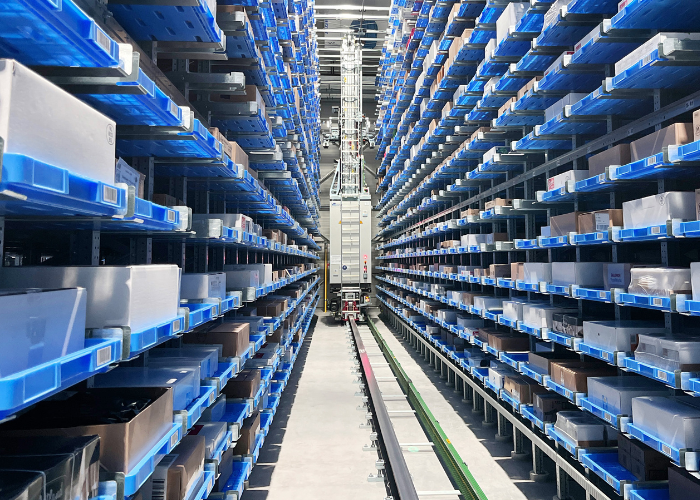
Automated deep-freeze warehouse at Früchte Jork
In the fully automated deep-freeze warehouse, sensor technology from Leuze ensures precise positioning of stacker cranes, even at temperatures as low as –30°C.
Warehouse technology for automated storage systems
Automated storage and conveyor systems are designed to achieve the highest possible throughput to transport large quantities of goods to their respective transfer points in a short amount of time. The storage system is highly automated and, in many areas, operates without the presence of personnel. Strict safety regulations and special protective measures therefore apply to personnel access to automated storage areas.
Changing customer expectations regarding ever-shorter delivery times are increasingly leading to the decentralization of warehouse structures. In addition to large central warehouses, smaller distribution centers are increasingly being established near metropolitan areas. These often specialize in fast-moving goods and seasonal products to enable short delivery routes and rapid order processing.
The warehouses’ technical specifications are determined by their respective requirements. While central warehouses often use versatile systems, such as stacker cranes, to handle large volumes of goods and various load carriers, distribution centers and micro-fulfillment centers prioritize compact, flexible, and adaptable storage solutions. These include, in particular, shuttle systems, which enable high storage density and rapid access to goods.
In addition, precise positioning of the conveyor and handling technology is essential for uninterrupted operation of automated storage systems. Due to varying load conditions, mechanical tolerances, and changes in environmental conditions, the actual positions of load carriers and storage locations may shift slightly. Appropriate sensors and positioning systems are used to reliably detect and compensate for these deviations.
A fundamental distinction is made between rough positioning in the X and Y directions and fine positioning of the load receptacle. Even deviations of just a few millimeters can compromise a safe load pick-up and lead to significant operational disruptions. Reliable sensor technology and precise positioning control are therefore essential prerequisites for safe and uninterrupted operation of automated storage systems.

Frequently asked questions about storage systems in intralogistics
Transport systems that have been specifically optimized for the storage and retrieval of goods and load carriers in automated warehouses are collectively referred to as storage systems. Key systems include stacker cranes, shuttle systems, cranes, and side-tracking shelves. These systems are designed to meet specific warehouse operation requirements and are used in particular for the handling and provision of goods within the warehouse. The material flow between the upstream transport systems and the storage systems takes place via defined transfer points. The transport system transports the goods and load carriers to the transfer point, where the storage system takes over further handling as well as automatic storage and retrieval.
In these transport systems, various states and process parameters must be continuously monitored to ensure safe and uninterrupted operation. These include, in particular, the presence and correct position of the load carriers, the position of the load receptacle, and the precise positioning of the transport system in front of the respective rack location. In addition, the transfer points must be monitored to determine whether they are free or occupied.
Another key aspect is employee safety, particularly during maintenance work or when people are present within automated warehouse areas. In addition, further process-dependent monitoring tasks are required to detect faulty operating conditions early, prevent malfunctions, and ensure a reliable material flow.
Due to the nature of these systems, automated storage and conveyor systems frequently use load carriers, such as containers or pallets, that are reused repeatedly within the material flow in a closed-loop system. To ensure unambiguous identification and traceability, each load carrier is assigned a unique code that allows it to be identified in the higher-level system and tracked along the material flow.
The technical implementation often relies on optical codes, such as bar codes or 2D codes, which are captured by corresponding readers. Alternatively, RFID systems are used, in which RFID transponders are attached to the load carriers and read contactlessly by RFID readers. Both technologies enable reliable identification of the load carriers and support the control and monitoring of automated storage and transport processes.
When selecting and designing the sensor system, several factors must be taken into account that significantly contribute to system availability and operational safety. A sufficiently high performance reserve in the sensors ensures reliable operation throughout their entire service life and provides tolerance for gradual changes, such as those caused by contamination, aging, or changing environmental conditions.
Many sensors also feature a warning function that issues a corresponding signal when defined signal thresholds or limit values are reached. This allows for the early detection of impending malfunctions and helps prevent unplanned system downtime as much as possible.
Sensors with an IO-Link interface also offer advanced diagnostic capabilities. In addition to the actual process data, additional information on the sensor’s status and signal quality can be provided. This data supports targeted error analysis as well as predictive maintenance. This allows service calls to be planned more efficiently, faults to be localized more quickly, and downtime to be reduced. Overall, this contributes to higher system availability and improved operational efficiency.